September Skies: Celestial Events to Watch from Whispering Springs
If August was about staying up until the small hours chasing meteors, September is about something quieter. The nights are cooling now, the forest is beginning its slow turn, and the sky is offering a different kind of reward — not the drama of a meteor shower, but the steady, accumulating pleasure of a season that knows exactly what it's doing.
September 2026 has three events worth marking. Venus is putting on one of her finest performances in years. The autumn equinox arrives on the 23rd. And the Harvest Moon rises on the 26th — one of the most evocative nights of the year.
Whispering Springs sits on 200 acres of old-growth forest in rural Northumberland County, with minimal light pollution and open views across the spring-fed ponds. On clear evenings, the sky here does things that city dwellers genuinely don't know it can do. September — warm enough to sit outside without a coat until 10pm, cool enough to want the fire lit — is one of the best months of the year to find out.
Venus — The Evening Superstar
All month — best after the first week
This September, Venus is not just the evening star. She is the full evening superstar. Having reached her greatest eastern elongation in mid-August, Venus is now high in the western sky after sunset — brilliantly, unmistakably bright, the kind of object that makes people stop and say what is that? She outshines everything in the sky except the Sun and Moon, and unlike stars, she doesn't twinkle. She holds steady and luminous above the tree line long after the sky has darkened.
You cannot miss Venus in September. She is the first light to appear after sunset, low in the west, and she stays visible for several hours before following the Sun below the horizon. No telescope needed. No app needed. Just look west about 20 minutes after the Sun goes down.
If you have binoculars, September is an excellent time to use them on Venus. Through even a modest pair, she resolves from a point of light into a tiny disc — and because she's now showing a crescent phase (like a miniature Moon), the shape is perceptible. It's one of those small revelations that astronomy offers quietly, without announcement.
Best time: Every clear evening, from sunset until about 10pm
Where to look: West, starting about 20 minutes after sunset
What you need: Nothing. Binoculars show the crescent phase.

The Autumn Equinox
Tuesday September 23
On the morning of September 23, day and night are equal length across the entire planet. The Sun rises due east and sets due west. After today, the nights begin to lengthen in earnest, and the quality of the darkness — already excellent at Whispering Springs — becomes something else entirely as autumn deepens. The equinox itself isn't a visual event. You won't see it happen. But it's a meaningful moment to mark if you're on the property — the hinge point of the year, the moment when the season turns from summer into autumn in the most literal astronomical sense.
For guests staying around the equinox: the forest at Whispering Springs is just beginning to show its first colour. Northumberland County's hardwoods turn through October, but the equinox week catches the very beginning of the change — a few early maples, the light shifting quality as the sun drops lower each day, the evenings arriving earlier and carrying a different temperature.
When: Morning of September 23
What to notice: Sunset due west, precise equal day and night, the first real sense that autumn has arrived
The Harvest Moon
Saturday September 26
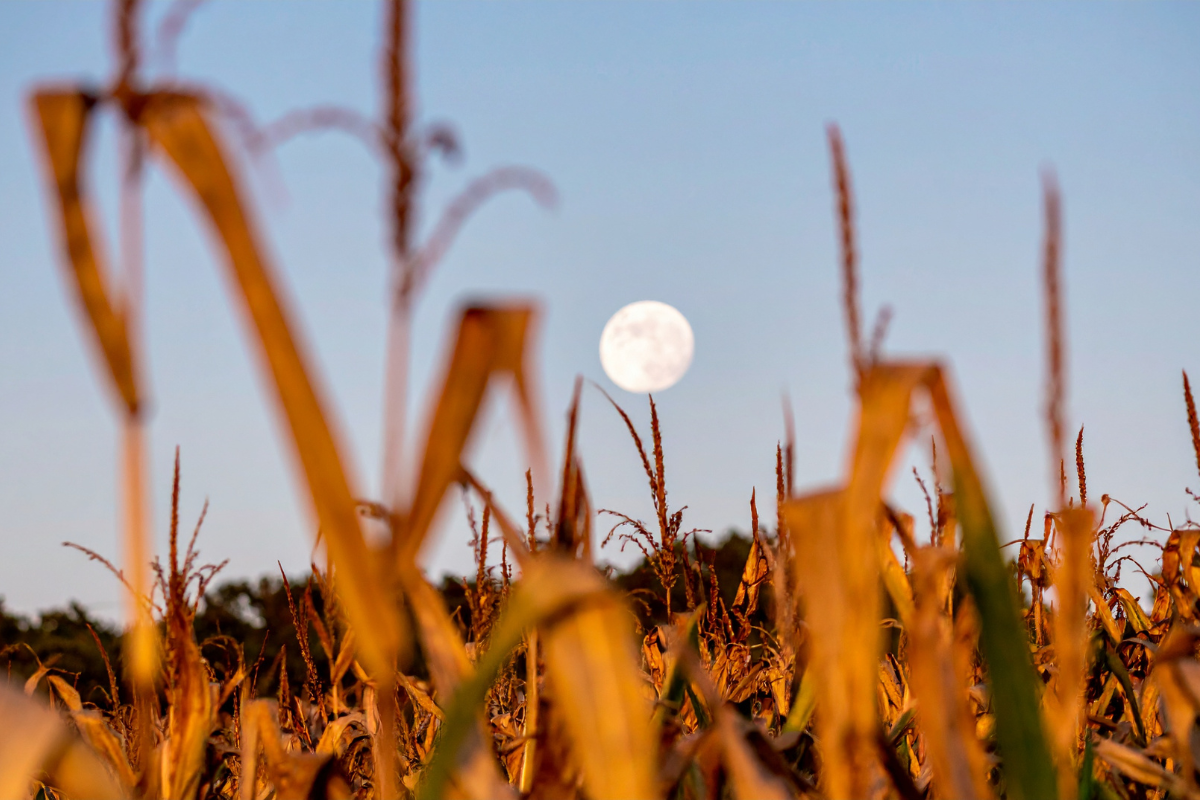
The full Moon closest to the autumn equinox is called the Harvest Moon — a name given to it centuries ago by farming communities across North America and Europe, because the bright, long-lasting moonrise gave farmers enough light to continue harvesting crops well into the evening. The Harvest Moon rises on the night of September 26th. It rises at sunset and sets at sunrise, meaning it's visible all night long — and in the days surrounding the full Moon, it rises only slightly later each evening, providing an unusually long run of bright moonlit nights.
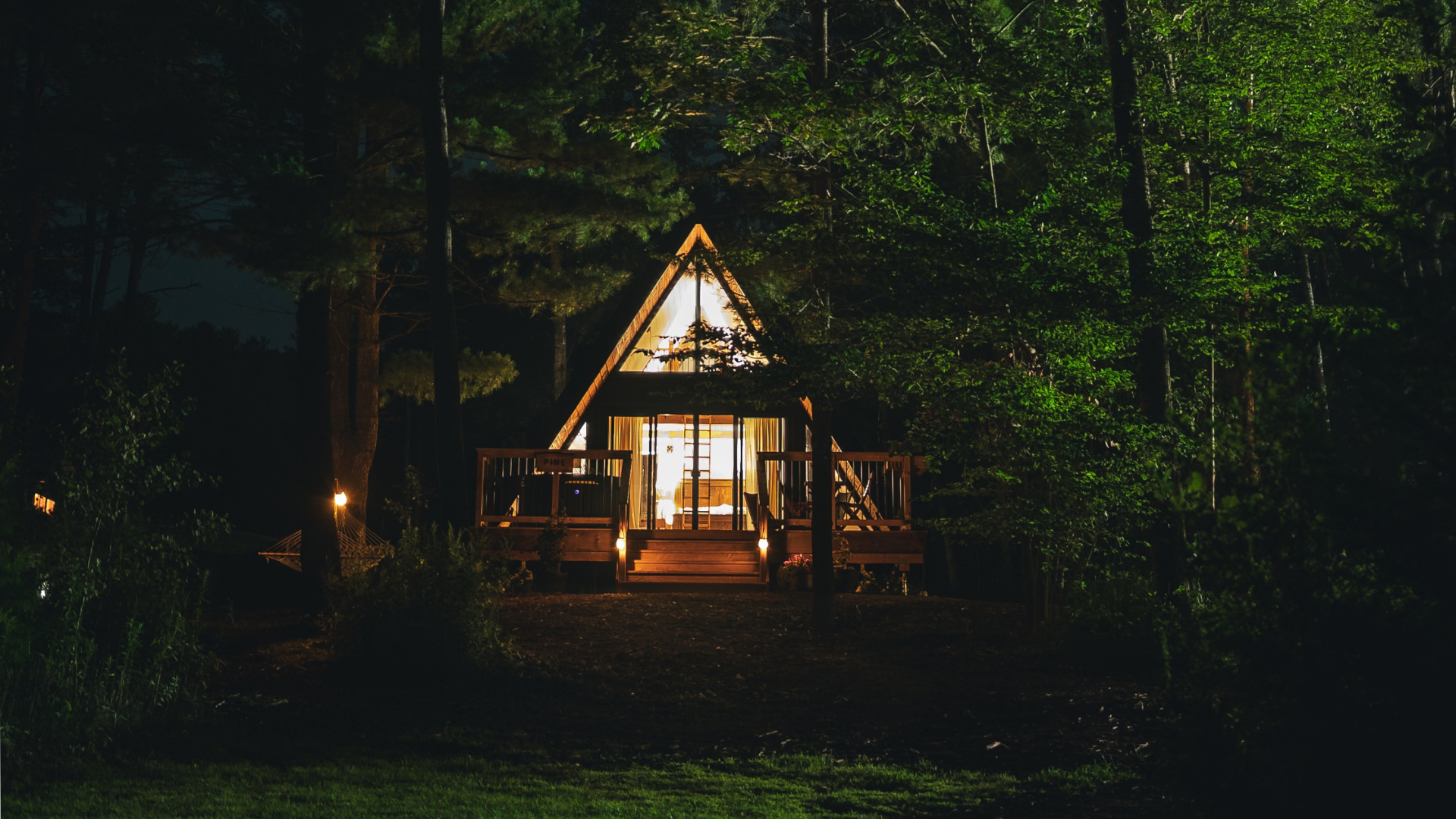
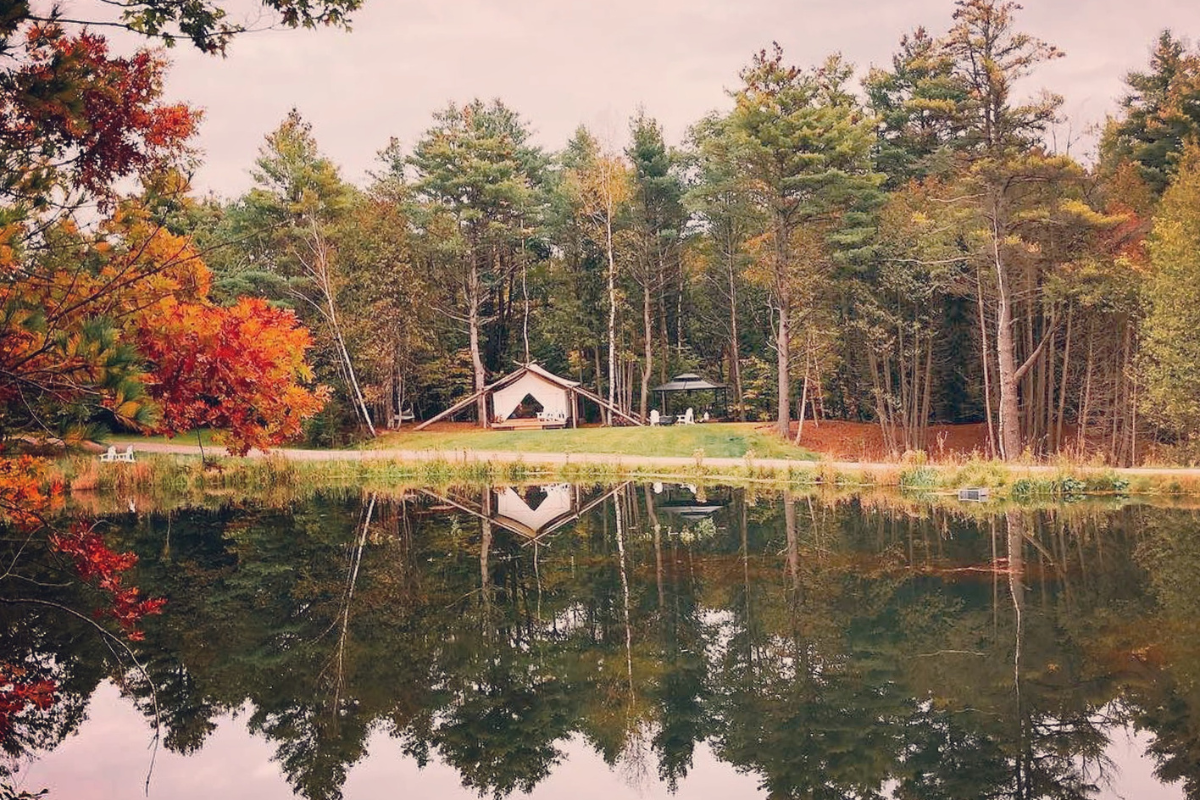
The Harvest Moon at Whispering Springs is a particular kind of experience. It rises through the trees on the eastern horizon — orange and enormous at first, the atmosphere bending its light — and within an hour it's climbing the sky, its reflection settling onto the spring-fed ponds below. If you're staying in one of the Treetop Tents or the A-Frame Cabins with their pond-facing floor-to-ceiling windows, this is the evening to stay up for.
One practical note: a full Moon is not ideal for deep-sky stargazing or spotting faint stars. The Milky Way becomes harder to see when the Moon is bright. But the Harvest Moon itself, rising large and amber through the forest canopy and walking slowly across the sky all night, is a sight that requires no dark-adapted eyes and no equipment — just a clear sky and a good place to sit.
Rises: Sunset on September 26
Best view: Anywhere on the property with an open eastern horizon — especially the ponds
What you need: Nothing

The Summer Constellations Take Their Leave
September is the last good month for the summer sky. Scorpius is already dropping toward the western horizon by early evening. Sagittarius follows. The galactic core — that dense, luminous band of the Milky Way that was so prominent on August nights — is shifting lower and will be harder to see by October.
But new things are arriving. Pegasus, the great winged horse, is climbing in the east. Perseus — the home constellation of August's Perseids — is rising earlier each night. And Orion, one of winter's great showpieces, begins appearing on the eastern horizon in the early morning hours, a preview of what the cold months will bring. September is a transitional sky, and there's something quietly satisfying about watching a season change overhead — the summer constellations making their exit, the autumn and winter ones stepping in to take their place.
Making the Most of September Nights at the Springs
The evenings are cooling but not cold. A blanket, a fire, and an hour of doing nothing but watching the sky is genuinely one of the better ways to spend a September night at Whispering Springs.
A few things that help:
Spot Venus first. It takes no effort and rewards immediately. Find it in the west after sunset and use it as an anchor to start the evening.
Let the Moon be the main event on September 25–26. On those nights, don't fight the moonlight — work with it. Watch the Harvest Moon rise. Walk the trails by its light. The ponds by full moonlight are extraordinary.
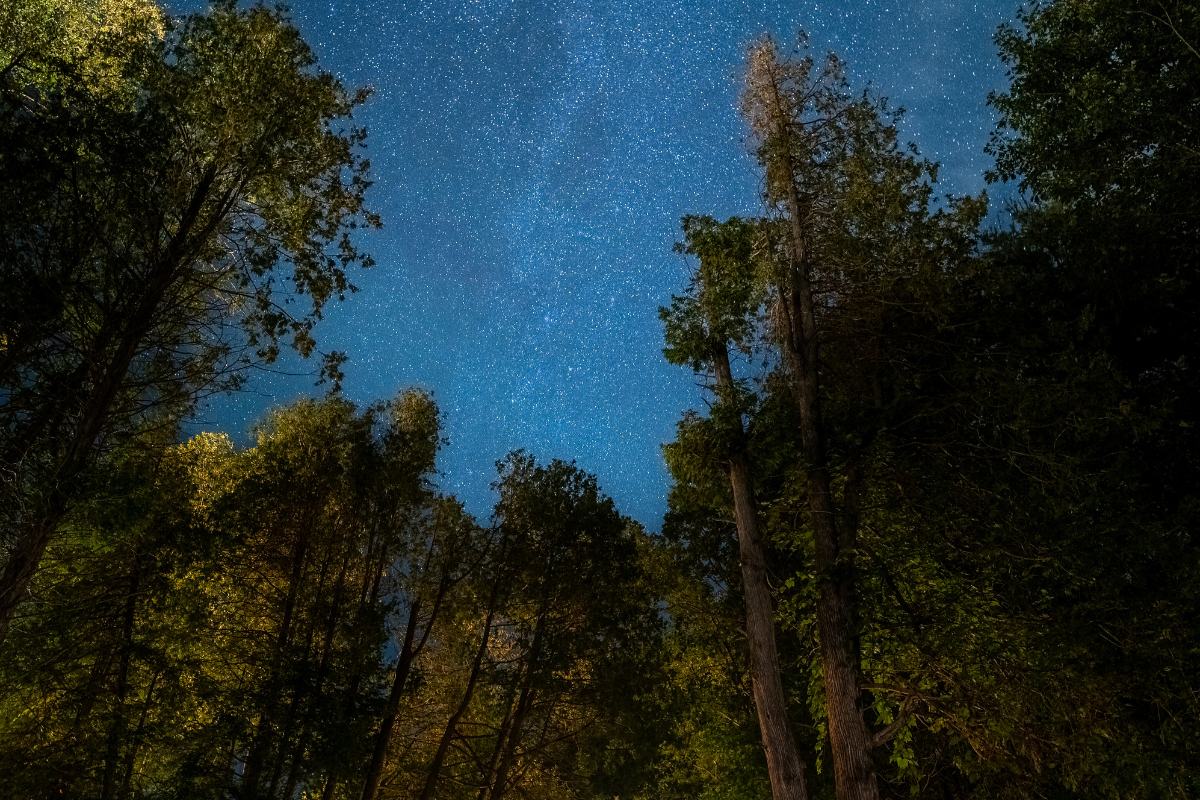
Save the dark-sky sessions for the first and last weeks of the month. The new Moon falls in early September, making those nights the darkest and best for the Milky Way and faint stars. The last week after full Moon is also progressively darker as the month closes.
Dress for 10pm, not 7pm. September evenings drop quickly once the sun goes down. What feels warm at dusk can feel chilly by 10 — bring a proper layer if you plan to stay out.
Photography by Matt Azzarello